
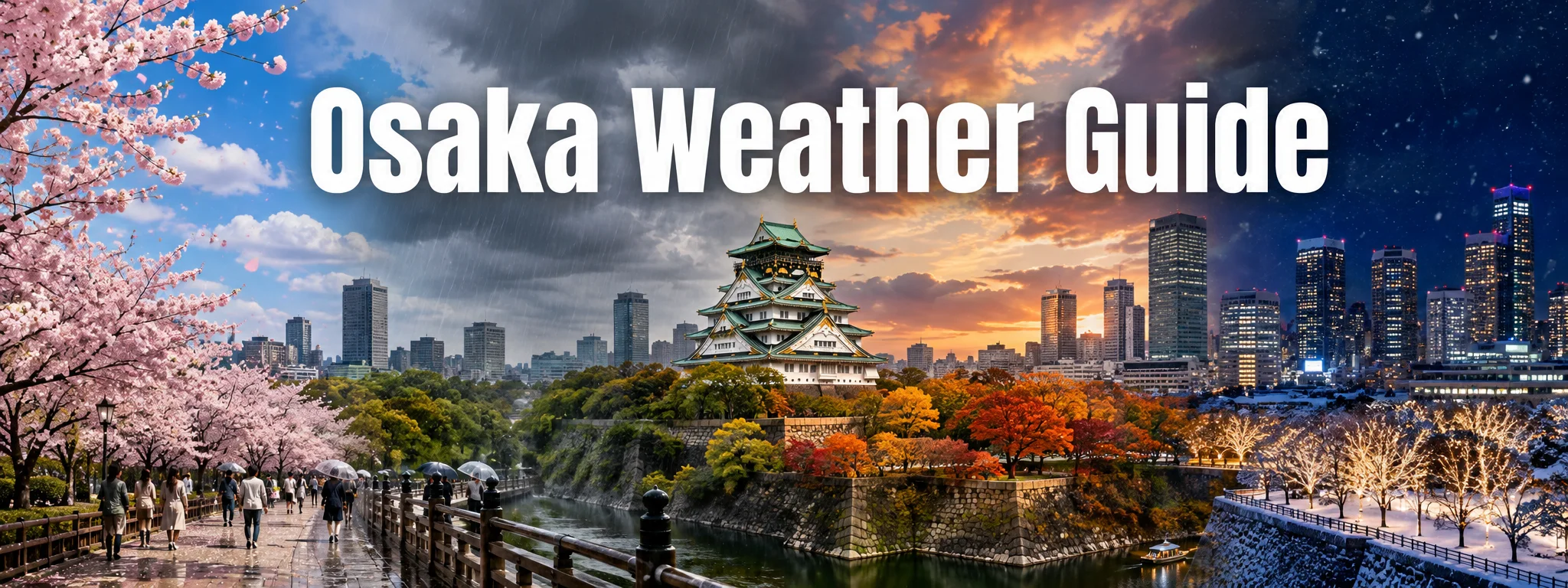
Read averages as a planning tool, not a promise
The Japan Meteorological Agency's 1991–2020 normals are the right baseline for Osaka, but an average cannot tell you whether your exact Tuesday will be wet or unusually hot. I plan clothes and daily rhythm from the season, then check the JMA forecast close to travel. That is especially important for cherry-blossom timing, heavy rain, heat alerts and tropical systems.
Osaka is humid in summer and comparatively dry in winter. The city also rewards flexible planning: covered shopping arcades, department-store food halls, museums and the aquarium make useful weather swaps, while castle grounds, river walks and long neighbourhood routes can move to the clearest part of the week.
January and February: cold, dry city-break weather
Winter days are cool rather than reliably snowy. Central Osaka rarely needs a snow itinerary, but wind around exposed stations, rivers and observation decks can make the air feel sharper than the thermometer suggests. I pack a warm outer layer, a light scarf and shoes comfortable enough for long, dry walks.
This is a strong period for food, shopping, museums and lighter crowds. Sunset comes early, so I put parks and day trips in the middle of the day and save illuminated streets, indoor attractions and dinner districts for evening. Check New Year opening calendars carefully if travelling in early January.
March and April: fast-changing spring
March can swing between winter jackets and mild afternoons. By April, walking is usually easier, but blossom-season crowds can be more significant than the weather. Cherry dates vary every year, so I do not treat a previous forecast as a booking guarantee.
Layers are the practical answer: a light jacket, something warmer for evenings and a compact umbrella. If blossom viewing matters, keep two possible park windows rather than assigning the whole trip to one predicted peak day. Golden Week begins at the end of April and can increase domestic travel demand.
May and June: excellent walking, then rainy season
Later May is often one of the easiest periods for exploring Osaka on foot—warm, green and usually less oppressive than midsummer. Early May is the exception because Golden Week can fill transport and attractions. As June progresses, humidity and the seasonal rains become more important.
Rainy season does not mean constant rain, but waterproof shoes and a small umbrella are more useful than optimistic hourly planning. I group outdoor stops by area, avoid carrying a rigid all-day route and keep a genuine indoor alternative nearby. Wet platforms and station stairs also make oversized luggage less appealing.
July and August: redesign the day around heat
JMA normals show midsummer as Osaka's hottest period, with mean temperatures around 27.7°C in July and 29.0°C in August. Humidity makes prolonged exposed walking harder than the numbers alone suggest. I schedule outdoor highlights early, use an air-conditioned lunch or museum as the midday anchor, and return outside later.
Carry water, use shade, and take heat warnings seriously. A packed castle-to-Dotonbori-to-Umeda day that feels reasonable in November can be exhausting in August. Summer festivals are a real reward, but they bring crowds as well as heat; identify station exits and a meeting point before entering a busy event.
September: lingering heat and typhoon flexibility
September often begins more like summer than autumn. It is also a period when tropical systems can disrupt flights, trains and attractions across Kansai. That does not make every September trip unsafe; it means the plan needs flexible bookings and attention to official weather and operator notices.
If a system approaches, follow JMA warnings and the instructions from the airport, rail operator and accommodation. Do not travel to a closed attraction simply because a general map app still shows a route. Keep medicines, power and one change of clothes accessible if the arrival or departure day looks uncertain.
October and November: the easiest walking season
Lower humidity and comfortable days make October and November my default recommendation for first-time visitors who want to cover districts on foot. Autumn colour tends to build later than many travellers expect, with late November often more useful than early October for foliage.
Popular autumn weekends still create queues, and Kyoto demand can spill into Osaka accommodation and trains. Pack a light layer for evenings and a warmer one later in November. The main advantage is not perfect weather every day; it is that a long outdoor route usually needs fewer recovery breaks.
December and a weather-proof first plan
December turns cooler and drier, with illuminations giving evening walks a purpose. Before any trip, I build one dry-day route and one wet-or-hot-day route. A dry day might combine Osaka Castle, Nakanoshima and a district walk; the fallback might combine Kaiyukan, a food hall, a museum and a covered arcade.
Pack for decisions rather than every remote possibility: breathable layers in warm months, a proper warm layer in winter, comfortable shoes all year, and compact rain protection in every season. Recheck the forecast each morning and move the most weather-sensitive stop instead of forcing the original sequence.
Check the Japan Meteorological Agency for the live Osaka forecast, warnings and typhoon information. Climate normals explain the season; current alerts decide the day.
Cheers, Carpe Diem & pack for the day you actually get! 🍻⏳🌦️
TATS Man
Your forecast-checking Osaka planner