
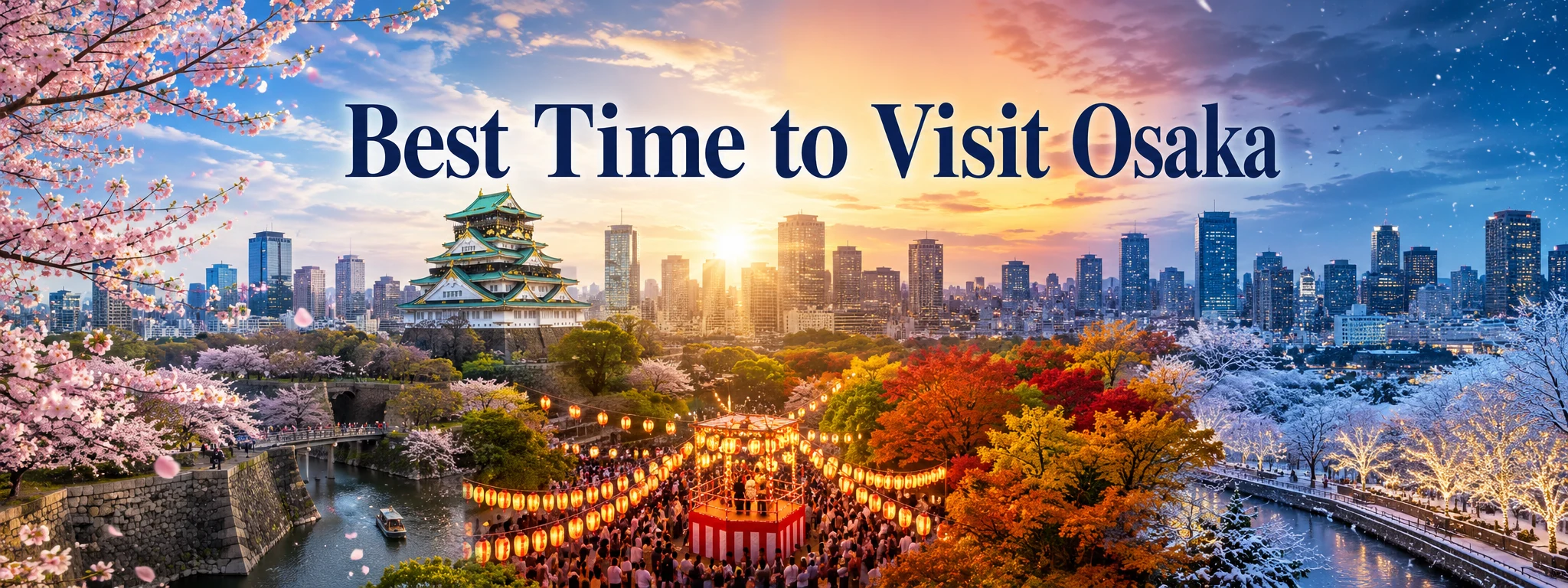
The short answer
For the easiest first trip, aim for mid-April to May outside Golden Week, or October to late November. These periods usually offer comfortable walking weather and long sightseeing days without the most intense summer heat. The trade-off is that popular weekends and autumn-colour periods can still be busy.
Choose late March to early April specifically for cherry blossoms, July for festival energy, August only if you tolerate heat well, and January or February for lower crowds and a more indoor-focused city break. Your priorities matter more than a generic “best season” ranking.
March and April: blossom season
Cherry blossoms usually become the headline in late March and early April, with Osaka Castle Park and riverside areas among the obvious gathering places. Exact flowering dates move every year, so never book a non-refundable trip around a date copied from last season. Check the current forecast close to departure.
This is one of the hardest periods for last-minute accommodation. Reserve early if blossoms are the reason for your trip, and expect famous viewpoints to be busiest around the short peak-bloom window. Early starts and neighbourhood walks can make spring feel much calmer than the headline spots suggest.
May: excellent weather, one big caveat
May can be one of Osaka's easiest months for long walking days: warm without midsummer humidity and with parks fully green. The exception is Golden Week around the turn of April and early May, when domestic travel demand surges across Japan and transport, attractions and hotels can be much busier.
If your dates overlap the national holiday cluster, book intercity trains and headline attractions earlier than you normally would. Later May is often a much simpler version of the same pleasant season.
June: rainy season
June brings the seasonal rains. That does not mean all-day rain every day, but humidity rises and showers can disrupt outdoor-heavy plans. It is a workable month if you build flexibility into the itinerary: museums, food districts, shopping arcades and aquariums give Osaka strong wet-weather options.
Pack light rain protection and shoes that cope with wet pavements. Avoid scheduling every scenic outdoor stop on a fixed day; move Osaka Castle parks, Minoh or long neighbourhood walks to the clearest forecast window.
July and August: festivals versus heat
Summer is Osaka at its most energetic and most physically demanding. The Japan Meteorological Agency's climate normals put Osaka's mean temperature around 27.7°C in July and 29.0°C in August, and daytime heat plus humidity can make long exposed walks exhausting. Build air-conditioned breaks into the route and do not treat midday like a normal shoulder-season sightseeing block.
The reward is summer atmosphere, including major matsuri and evening events. Tenjin Matsuri in late July is a major draw, but large crowds and transport changes are part of the experience. If heat tolerance is low, the festival calendar is not enough reason to choose midsummer.
September: still hot, with storm awareness
September can remain very warm, especially early in the month. It also sits within Japan's typhoon season, so travellers should keep an eye on Japan Meteorological Agency forecasts and transport notices rather than assuming a fixed itinerary will run unchanged.
A typhoon does not mean Osaka is continuously unsafe for the entire month. It means you need flexible bookings and a plan for rail or attraction disruption if a system approaches Kansai during your dates.
October and November: the easiest all-round choice
October usually brings lower humidity and comfortable walking conditions. November adds autumn colour later in the month, with parks and day-trip destinations becoming especially attractive. For travellers who want to cover a lot of ground on foot, this is often the most forgiving period of the year.
Autumn weekends around famous foliage spots can still be crowded. If Kyoto is part of the same trip, remember that Kyoto's autumn demand can affect Osaka hotel and transport planning too, even when Osaka itself feels less compressed.
December to February: underrated city-break season
Winter in Osaka is cool and comparatively dry. Snow in the central city is uncommon enough that it should not be the basis of your plan. Clear days, illuminations and easier access to many indoor attractions make winter attractive for food, museums, shopping and city views.
The biggest caveat is the New Year period. Some museums, restaurants and smaller businesses close or shorten hours around late December and early January, while shrines become busy for hatsumode. Check individual operating calendars if your trip straddles New Year.
Choose the season by priority
For blossoms: late March to early April, with flexible expectations. For walking and first-time sightseeing: later April, May outside Golden Week, October or November. For festivals: July, accepting heat. For lower crowds and indoor city travel: January or February. For a value-oriented trip with weather flexibility: June or September can work, but build around the forecast.
Osaka is a year-round city. The wrong choice is not a particular month; it is choosing a month for one advantage while ignoring the season's obvious trade-off.
For cherry blossoms, typhoons and extreme heat, use a current forecast close to travel. Climate normals tell you what is typical; they cannot tell you what your exact week will do.