
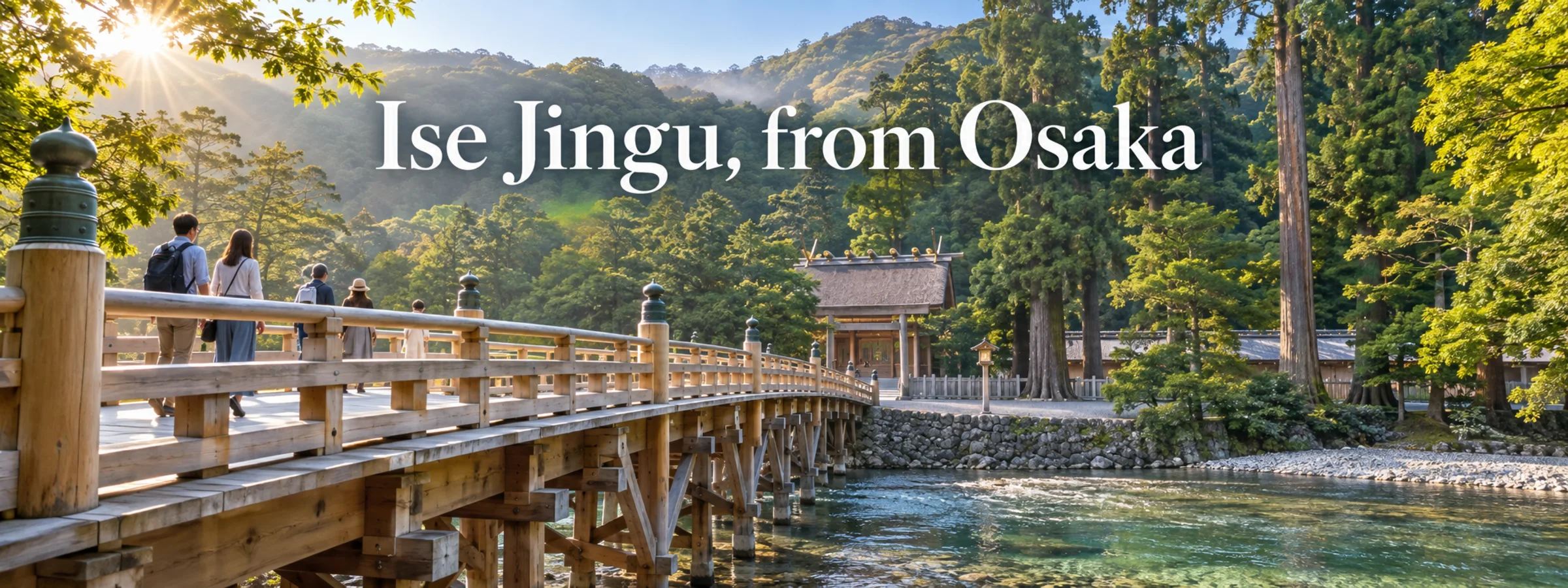
Naiku and Geku
Ise Jingu is really two main shrines a short bus ride apart: Geku, the outer shrine, dedicated to the deity of agriculture and industry, and Naiku, the inner shrine, dedicated to Amaterasu, the sun goddess considered the ancestral deity of the imperial line. Naiku is generally treated as the more essential of the two if time is tight, its approach crossing the Isuzu River over the Uji Bridge.
Rebuilt every 20 years
In a tradition called Shikinen Sengu dating back over 1,300 years, Ise Jingu's main structures are rebuilt from scratch every 20 years on an adjacent plot, using traditional techniques and fresh timber, then the old site is cleared. It's a striking approach to preservation — treating renewal itself, rather than the physical materials, as what keeps the shrine sacred.
Getting there, and whether to make it a day trip
The Kintetsu limited express runs fairly directly from Osaka Namba to Ise-shi or Isuzugawa station in a little over two hours, meaning a realistic round trip eats up four-plus hours of travel alone. It's doable as a long single day focused entirely on Ise, but it doesn't combine well with anything else that day — if your schedule allows it, treating it as an overnight, or combining it with other stops in Mie or Wakayama, makes for a much less rushed visit.
Ise Jingu is a working shrine rather than a museum piece — photography is restricted in the innermost areas around Naiku's main hall, and a respectful, unhurried pace is expected throughout.